
 Home
Home  Our Brands
  About US
  Contact US
 Contact US
The Strategic Dilemma: Global Giants vs. Regional Partners
Profitable food businesses demand consistent supply chains. When sourcing ingredients like strawberries, blueberries, and premium 3-berry mixes, procurement managers face a critical decision. They must choose between industrial titans like Harvestime and regional distribution networks. This decision impacts everything from profit margins to product consistency.
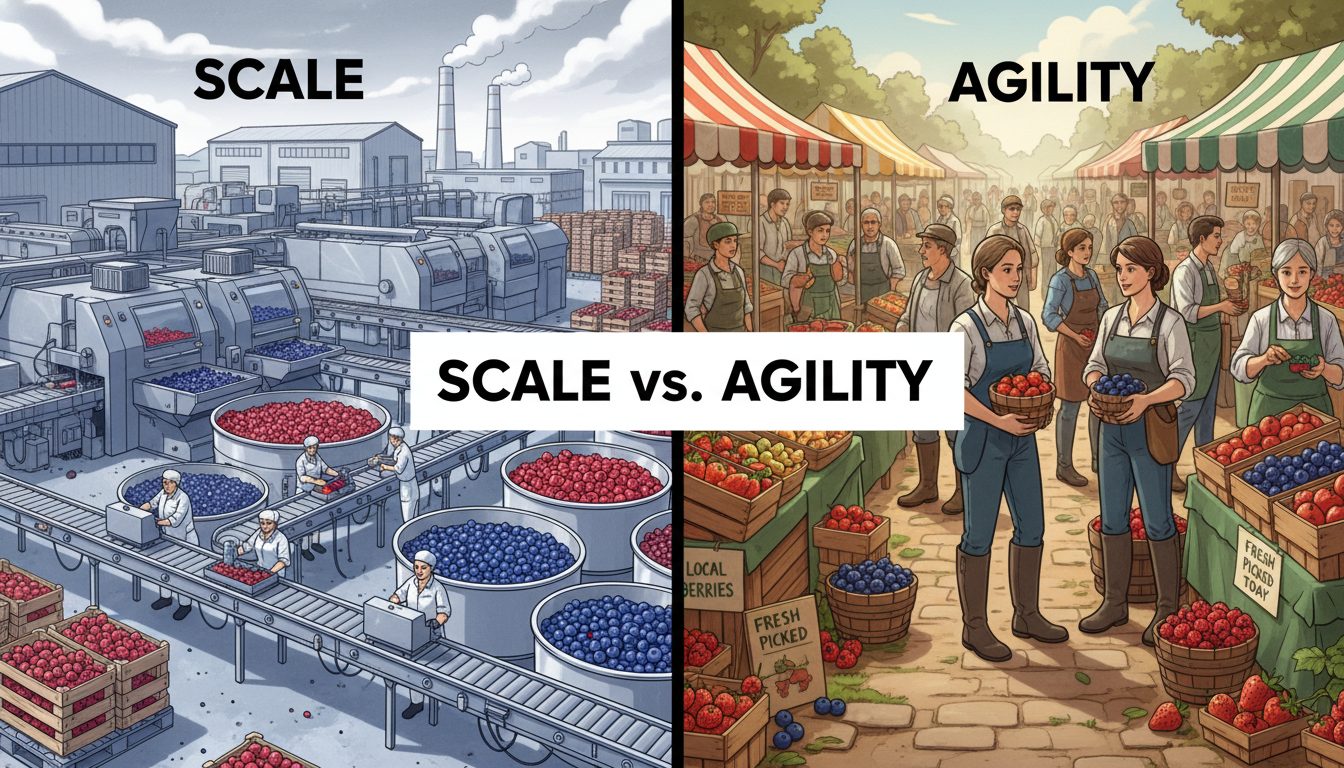
Fundamentally, this choice defines your operational resilience. Harvestime vs local wholesalers represents a choice between global standardization and regional agility. In light of this, we dissect these options, providing a bulk berry wholesalers comparison to guide your next contract negotiation.
Analyzing Consistency and Quality Assurance
Quality consistency drives customer retention. Harvestime utilizes advanced Individually Quick Frozen (IQF) technology. This process freezes fruit at the moment of peak ripeness. As detailed in our guide on the Harvestime farm-to-freezer quality difference, a manufacturer produces a muffin in December that tastes identical to one produced in June. Industrial suppliers strictly control variables including brix levels (sugar content), size, and color.
Conversely, local wholesalers deal primarily in fresh market produce. While this offers superior texture for immediate consumption, it introduces variability. For example, chefs seeking specific seasonal experiences, such as picking wild blueberries in Sydney, often appreciate this nuance. However, a drought in the local region immediately impacts the size and sweetness of the berries. Therefore, businesses requiring exact product specifications often find local sourcing challenging.
Certifications and Safety Standards
Compliance determines viability for large-scale buyers. Major retailers and food manufacturers require rigorous safety audits. Harvestime typically holds Global G.A.P., BRC, and ISO certifications. These credentials verify strict adherence to international safety standards.
Moreover, local wholesalers may lack these expensive certifications. While their product remains safe, the lack of documentation creates liability for large food processors. Thus, for industrial buyers, certified wholesale berry suppliers reduce regulatory risk.
Supply Chain Reliability and Seasonality
Inventory shortages kill revenue. Harvestime operates a global procurement network. To secure customer favorites in NSW and beyond, they seamlessly shift to South American or European suppliers when the North American season ends. This geographic diversity insulates buyers from regional crop failures.
However, local wholesalers remain at the mercy of the local climate. A single late frost destroys a local harvest. Consequently, businesses relying solely on local sourcing face potential blackouts in their supply chain. Similarly, sourcing high-volume staples like 12kg bulk Australian raspberries becomes risky without a diversified supplier. To mitigate this, some buyers use a hybrid model, but this complicates logistics.
- Harvestime: Year-round availability via global sourcing and cold storage.
- Local Wholesalers: Highly seasonal availability; superior freshness during peak season.
- Harvestime: Capable of fulfilling multi-container orders on short notice.
- Local Wholesalers: Limited volume caps; ideal for small to medium orders.
Pricing Structures and Economic Impact
Financial planning requires predictable costs. We analyzed the wholesale berry pricing guide metrics for both options. Harvestime offers contract pricing. Buyers lock in rates for 6-12 months. This stability allows for accurate budget forecasting and menu costing.
In contrast, local wholesalers operate on spot market pricing. Prices fluctuate weekly based on supply and demand. While this sometimes yields cheaper berries during a bumper crop, it exposes buyers to price spikes during scarcity. Furthermore, industrial suppliers offer significant volume discounts that local entities cannot match due to their smaller overhead absorption.
Logistics: The Cold Chain Reality
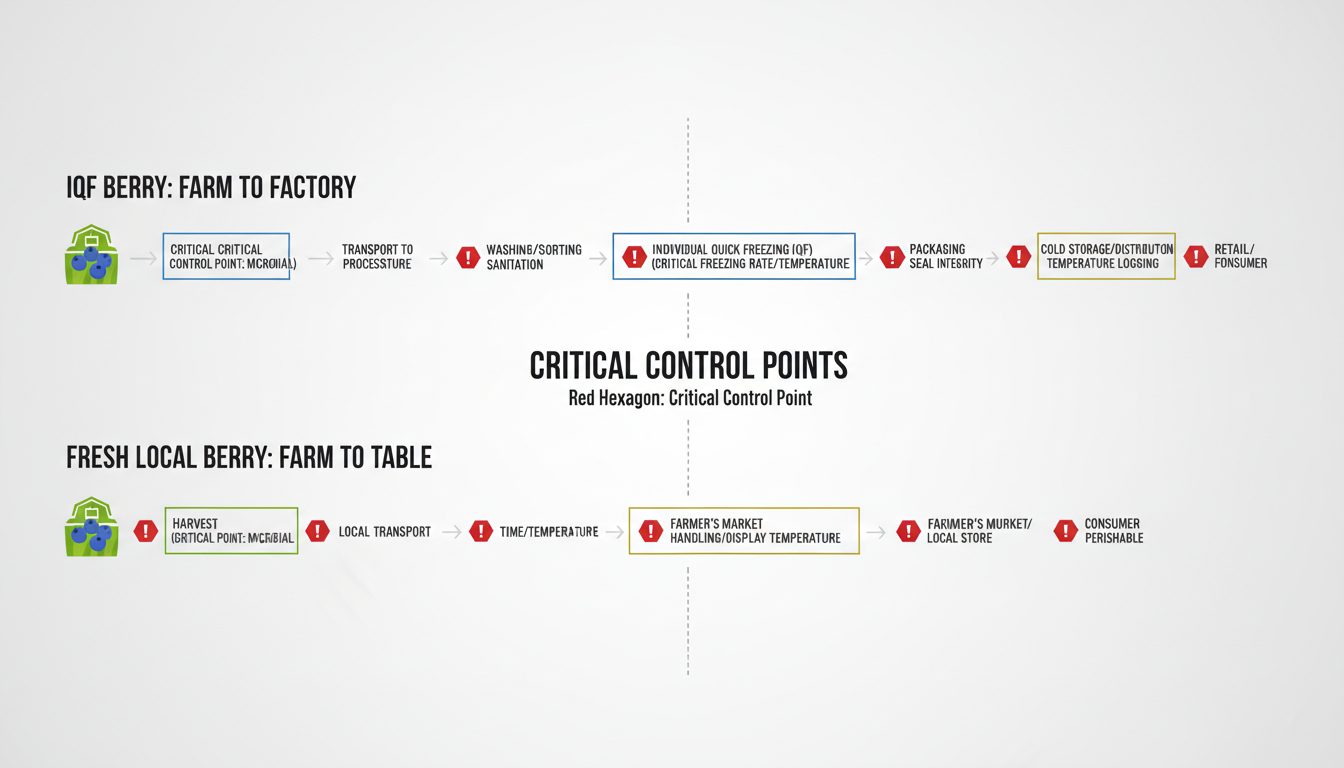
Freshness depends on logistics. Harvestime controls the entire cold chain, from the farm gate to your loading dock. They utilize temperature-logged shipping containers that guarantee the cold chain remains unbroken. This rigor minimizes spoilage and waste claims for delicate items like 10kg cartons of Australian strawberries.
Alternatively, local logistics vary significantly. Some local wholesalers utilize third-party couriers lacking specialized refrigeration. This increases the risk of product degradation during transit. Sourcing bulk berries for business requires vetting these logistical capabilities intensely.
Conclusion: Making the Right Investment
Ultimately, the decision rests on your business model. If you manufacture jams, frozen desserts, or mass-market baked goods, Harvestime provides the necessary scale, consistency, and safety documentation. The stability of their pricing and supply chain safeguards your production schedule.
On the other hand, if you operate a high-end restaurant or a boutique bakery emphasizing seasonality, local wholesalers offer a narrative of freshness that industrial giants cannot replicate. Assess your volume needs, risk tolerance, and brand positioning. Choose the partner that aligns with your long-term growth strategy.


 Home
Home